
Signs You're Buying Low-Quality Olive Oil
Learn how to identify low-quality olive oil by checking the label, origin, packaging, freshness, flavour and other key details before you buy.
Sep 16, 2026
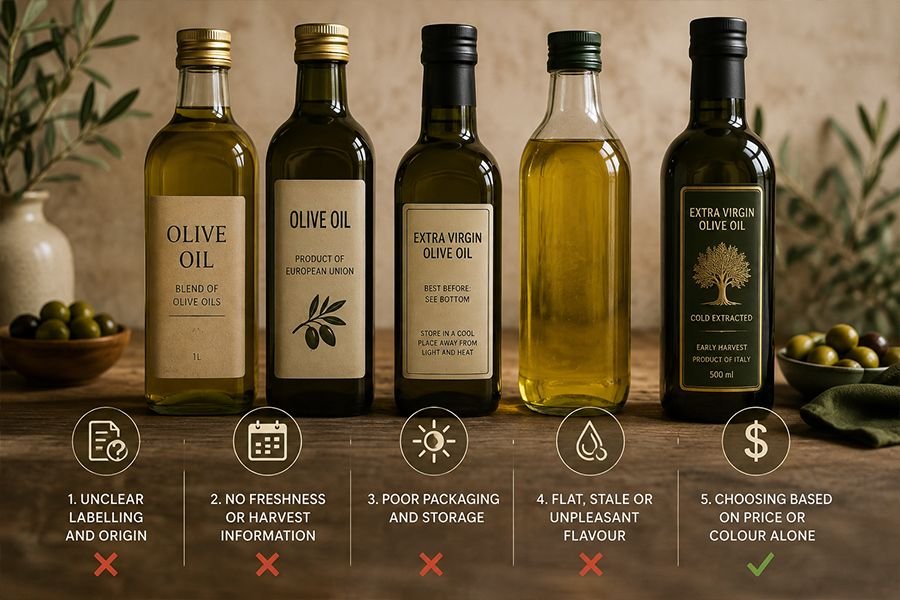
How Can You Tell If Olive Oil Is Low Quality?
Not all olive oils offer the same quality, freshness or flavour. The label, packaging, origin and freshness can tell you a lot about the product.
Knowing what to look for can help you make a more informed choice when buying olive oil. Here are 5 important signs you may be buying low-quality olive oil.
1. Unclear Labelling and Origin
A quality olive oil should tell you what you are buying. Look for clear information about the oil type, country or region of origin, producer and, where available, the olives or production details. Vague labelling can make it difficult to understand the product's provenance and quality.
2. No Freshness or Harvest Information
Freshness matters when choosing olive oil. Check the best-before date and look for a harvest date when available. Olive oil is best enjoyed while fresh, so knowing when the olives were harvested can give you a better idea of the oil's age.
3. Poor Packaging and Storage
Light, heat and oxygen can affect olive oil over time. Look for bottles that offer protection from light, such as dark glass, and avoid products that have been stored in direct sunlight or near heat. At home, keep olive oil tightly sealed and store it somewhere cool and dark.
4. Flat, Stale or Unpleasant Flavour
Fresh olive oil should have a distinctive aroma and flavour. Depending on the variety and style, you may notice fruity, herbal, grassy, bitter or peppery characteristics. If the oil tastes stale, flat or unpleasant, it may not be at its best.
5. Choosing Based on Price or Colour Alone
A very low price does not automatically mean an olive oil is poor quality, just as a higher price does not guarantee excellence. Similarly, colour is not a reliable quality indicator. Instead, consider the oil's type, origin, freshness, packaging, producer and flavour.
What Should You Look for When Buying Olive Oil?
When buying olive oil, start by reading beyond the front label. Look for:
- A clearly stated olive oil category
- Transparent origin information
- A harvest or best-before date
- Protective packaging
- A reputable and identifiable producer
- Fresh, pleasant aroma and flavour
If you are buying extra virgin olive oil, pay particular attention to its freshness and sensory character. A good olive oil should add flavour to your food rather than simply act as a neutral cooking ingredient.
How Can You Choose Better Olive Oil?
Choosing better olive oil comes down to being an informed buyer. Do not rely on colour, price or attractive packaging alone. Check the label, understand where the oil comes from, look for freshness information and consider how it has been packaged and stored.
It can also help to explore different olive oil varieties and flavour profiles. Some are mild and fruity, while others can be more robust, grassy or peppery.
Once you know what to look for, finding an olive oil that suits your taste and cooking becomes much easier.
Frequently Asked Questions
How can you tell if olive oil is good quality?
Look for clear labelling, traceable origin, freshness information, suitable packaging and a pleasant, distinctive aroma and flavour. For extra virgin olive oil, fruity, herbal, bitter or peppery notes can be natural characteristics.
What are the signs of low-quality olive oil?
Common signs include unclear labelling, limited origin information, poor storage, excessive exposure to light or heat, missing freshness information and a stale or unpleasant flavour.
Does olive oil colour indicate quality?
No. Olive oil can range from green to golden depending on factors such as olive variety and ripeness. Colour alone is not a reliable indicator of quality.
Should olive oil have a harvest date?
A harvest date can help you understand when the olives were harvested and provides useful information when assessing freshness.
How should olive oil be stored?
Store olive oil in a cool, dark place away from direct sunlight and heat. Keep the bottle tightly closed to minimise exposure to oxygen.
Keep Reading
Related Articles
More From The Journal
Stories, producer visits, and notes on authentic Italian food, straight from the Radice journal.